The basic goal
Pickleball is played as singles or doubles. You hit the ball over the net and try to make it bounce twice on your opponent's side, force an error or cause a fault. Most recreational games are played to 11 points and won by two.
How to serve
- Stand behind the baseline and serve diagonally into the opposite service court.
- Use a legal volley serve or drop serve under the current rules.
- Keep both feet behind the baseline until the ball is struck.
- The serve must clear the kitchen and its line.
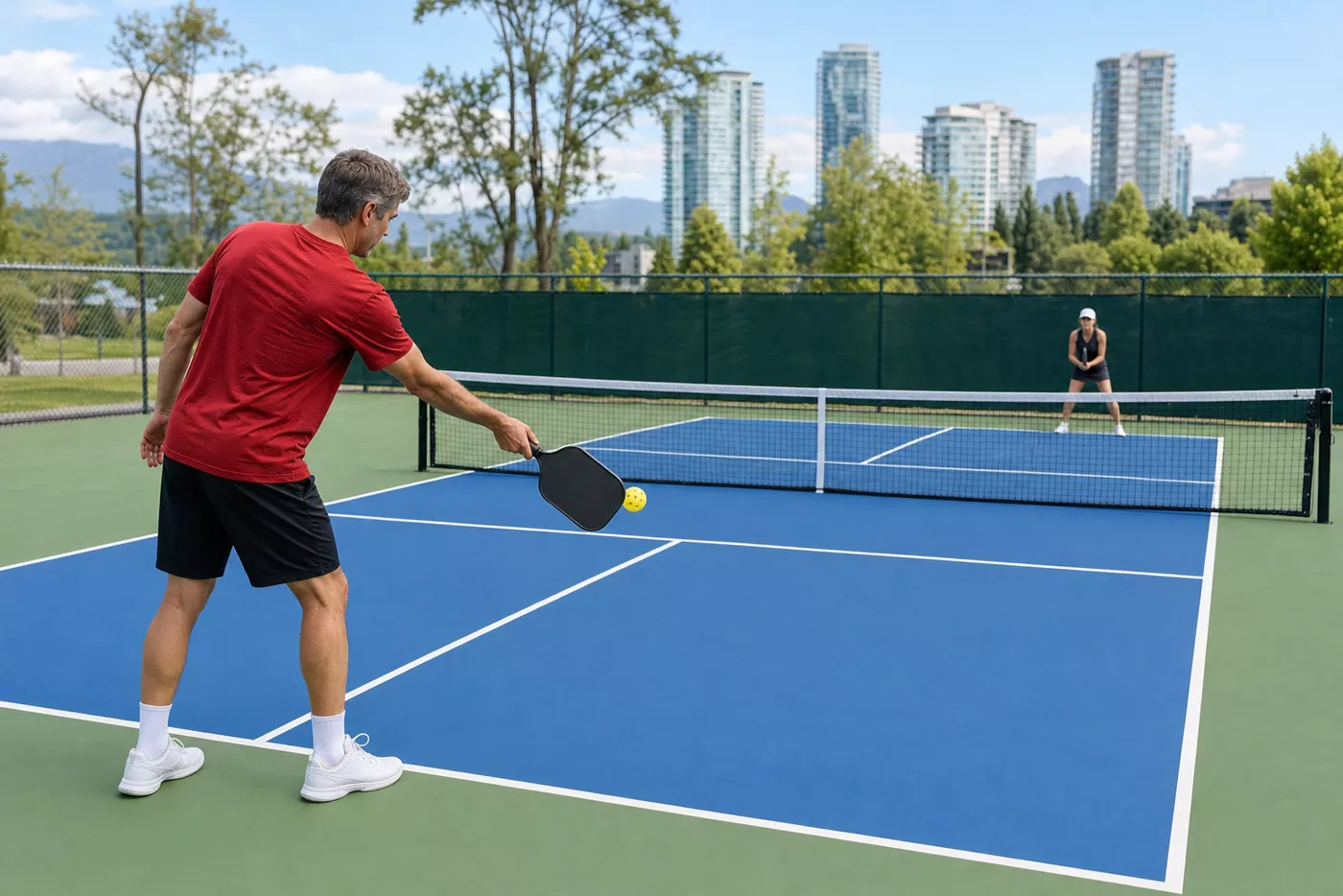
In traditional side-out scoring, only the serving team scores a point. When the serving team loses a rally, service passes to the partner or to the other team, depending on the sequence.
The two-bounce rule
After the serve, the receiving team must let the ball bounce before returning it. The serving team must also let that return bounce. After those first two bounces, either side may volley the ball or play it after a bounce.
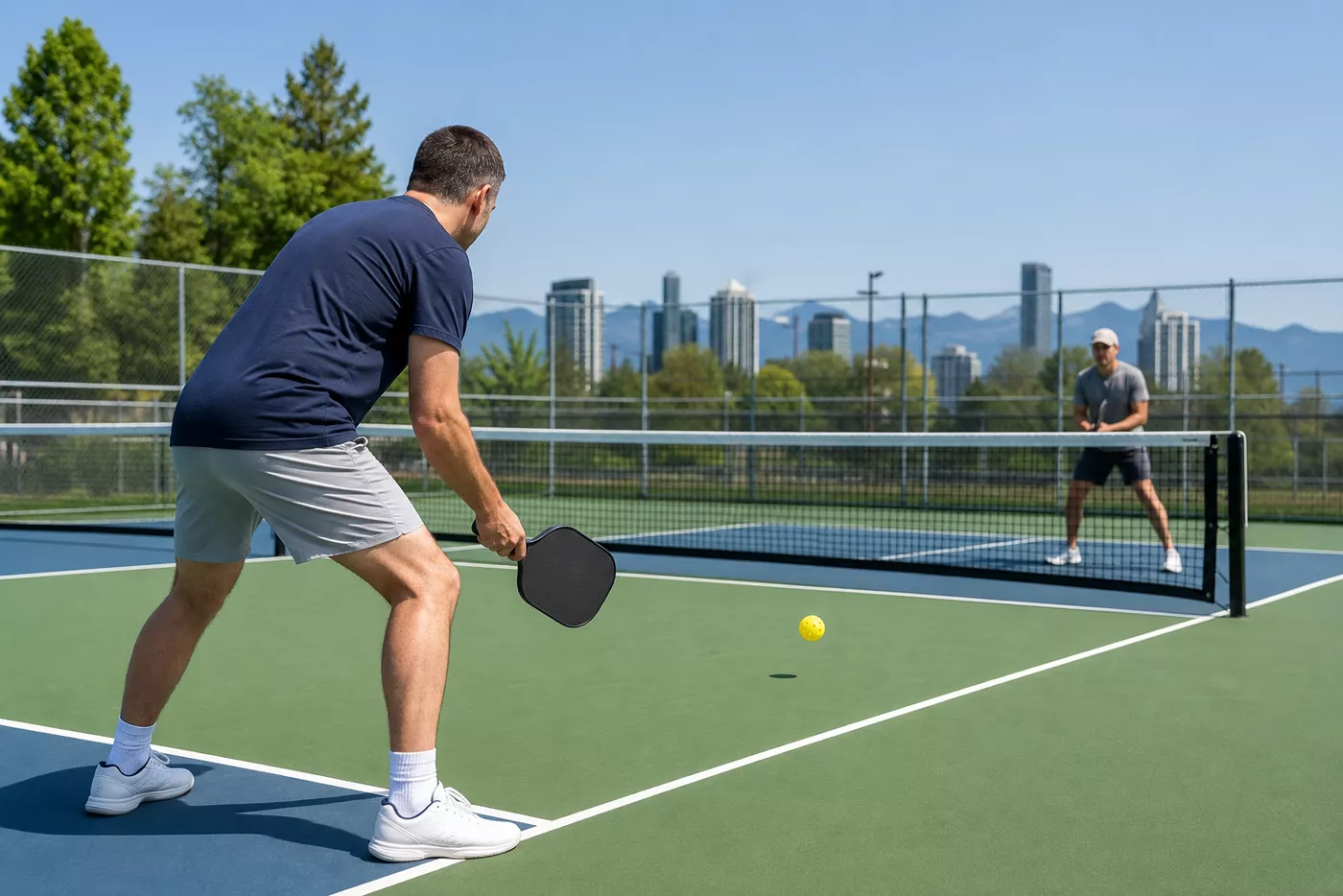
Serve, bounce, return, bounce. After that sequence, either team may hit the ball before or after a bounce.
This rule prevents the serving side from rushing immediately to the net and creates a fair start to each rally.
The kitchen rule
The seven-foot zone beside the net is the non-volley zone, commonly called the kitchen. You may stand in it and hit a ball after it bounces. You may not volley a ball while touching the kitchen or its boundary line.
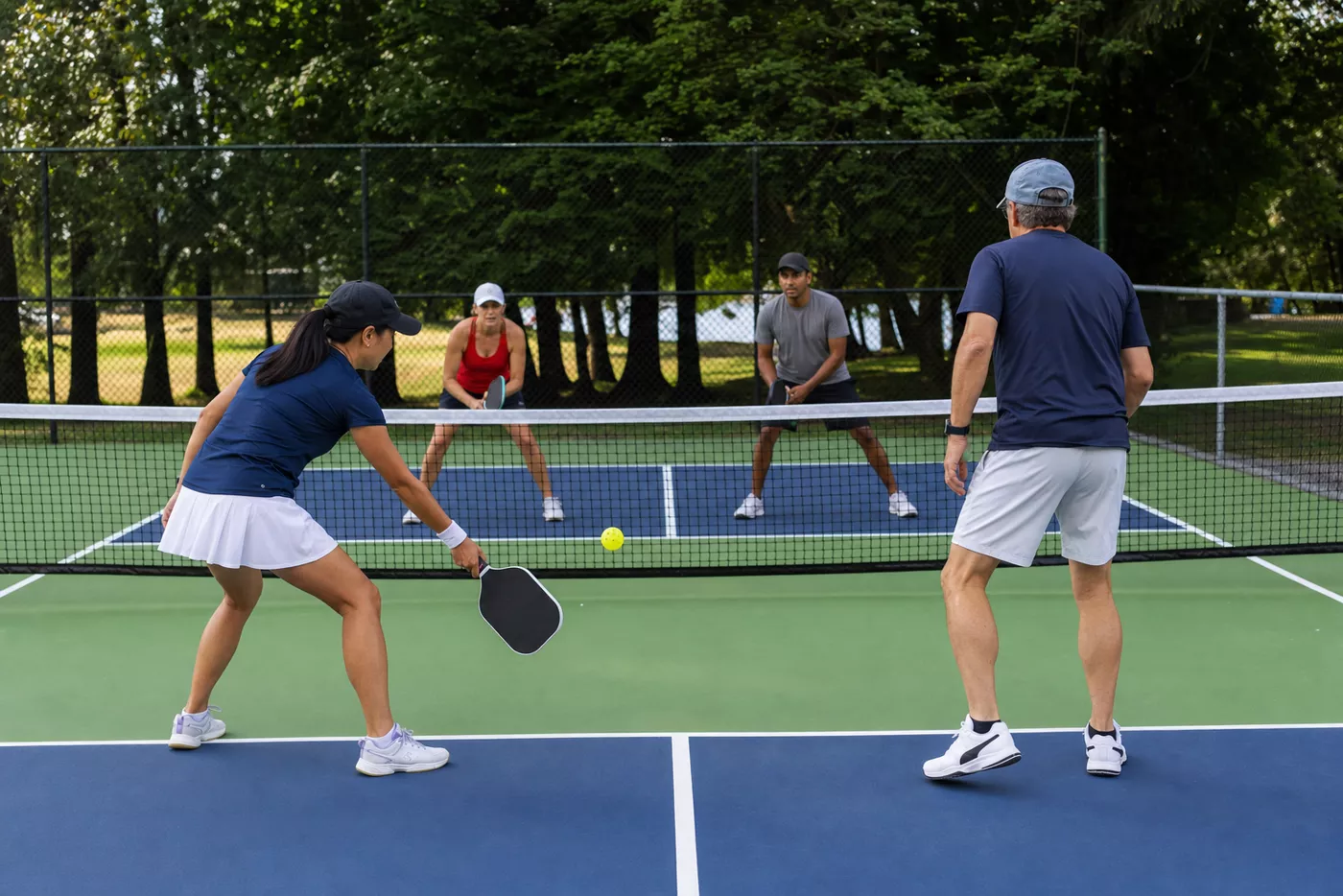
Your momentum also cannot carry you into the kitchen after a volley. That remains a fault even if the ball is already dead.
Doubles scoring
The score is called with three numbers: serving team's score, receiving team's score, and server number. For example, “4-2-1” means the serving team has four points, the receiving team has two, and the first partner is serving.
The opening service turn of a game is an exception and begins with the second-server designation. This prevents the team that serves first from receiving an unfair double service turn.
Common beginner faults
- Serving into the kitchen or outside the diagonal service court
- Volleying before both sides have allowed the required bounce
- Touching the kitchen line during a volley
- Hitting the ball into the net or outside the court lines
- Allowing the ball to bounce twice
Why a lesson helps
Rules are easier to remember when they are attached to movement. A beginner lesson walks through the serve, return, kitchen position and scoring in sequence, then reinforces them during guided points.